
What is a Compressor Oil Separator?
In screw compressors, the separator (oil separator) is a fundamental component that ensures the recovery of oil that mixes into the air stream during the compression process. When the efficiency of the separator declines, the compressor operates at a higher power load, oil carryover into the air line may occur, and operating costs significantly increase. Regular monitoring and timely replacement are essential for the stable and safe operation of the compressor.
11/27/20252 min read
1. The Core Function of the Separator
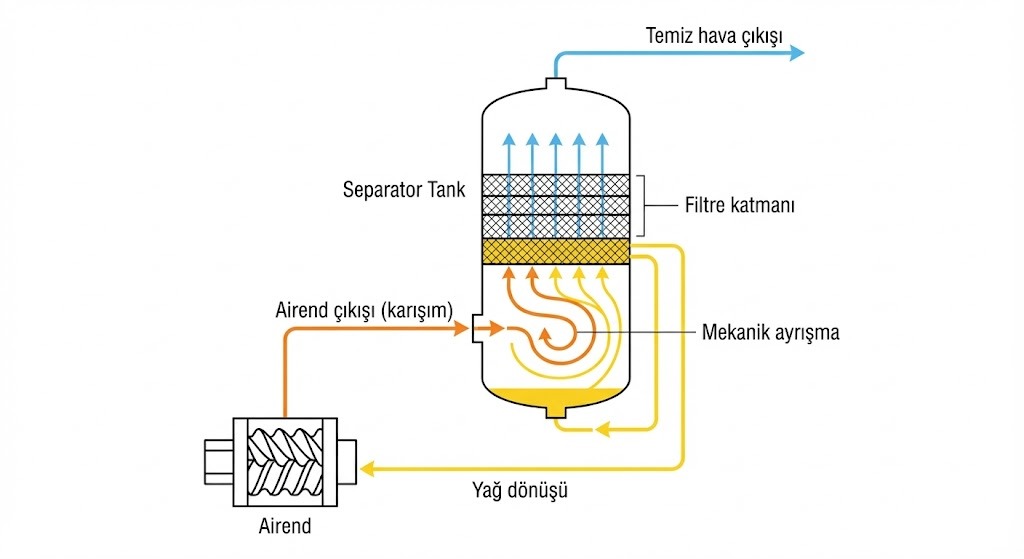
Inside the airend, compressed air and oil move together. The separator divides this mixture to:
Recover oil back into the system,
Direct clean air to the discharge line,
Minimize oil carryover in the air network.
This process directly impacts compressor efficiency and the health of downstream equipment.
2. How Does a Separator Work?
The separator operates based on two fundamental principles:
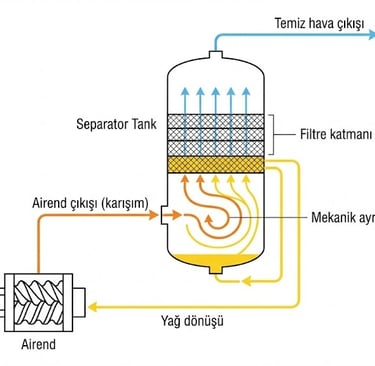
Mechanical Separation: When the air-oil mixture enters the tank, the flow slows down, causing large oil droplets to settle naturally. This oil returns to the circulation line.
Filtration Layer (Coalescence): Finer oil particles are trapped within the multi-layered structure of the separator filter. Only clean air is passed to the outlet.
This structure preserves flow rate, pressure balance, and air quality.
3. Operating Conditions Affecting Separator Performance
Separator lifespan varies based on environmental conditions, maintenance routines, and oil quality. The most influential factors include:
Air filter condition
Ambient dust and temperature
Oil quality and viscosity
Operating hours and pressure load
Service intervals
Degradation in these parameters leads to faster clogging of the separator.
4. Symptoms of Separator Failure
When separator performance declines, the following symptoms occur in the compressor:
Oil in the air line (Oil carryover)
Increased pressure drop ($\Delta P$) between inlet and outlet
Rising operating temperatures
Increased fuel or energy consumption
These signs indicate that replacement time is approaching.
5. When Should the Separator Be Replaced?
General Recommendation: Replace the separator every 1,000 – 2,000 operating hours.
However, earlier replacement may be necessary in the following cases:
Dusty or dirty working environments
Continuous operation at high pressure
Use of incorrect or low-quality oil
Poor air filter performance
A separator that is not replaced on time increases energy consumption and places an extra load on the airend.
6. Points to Consider During Replacement
For a proper separator replacement, follow these steps:
Depressurize the tank completely.
Clean the separator housing and mounting area.
Inspect gaskets and seals for integrity.
Tighten the new filter according to the manufacturer’s torque specifications.
Monitor pressure and temperature during the initial startup.
This ensures the filter performs correctly from the very first moment.
Conclusion
The compressor separator is a vital component for air quality, operating costs, and mechanical reliability. Regular monitoring and timely replacement ensure the compressor runs stably and enjoys a long service life.