
Essential Checks Before Buying a Used Compressor
A step-by-step checklist for purchasing used screw and diesel compressors, including pressure, flow (FAD), running hours, service history, and load testing.
COMPRESSOR SELECTION & ENGINEERING GUIDES
11/30/20255 min read
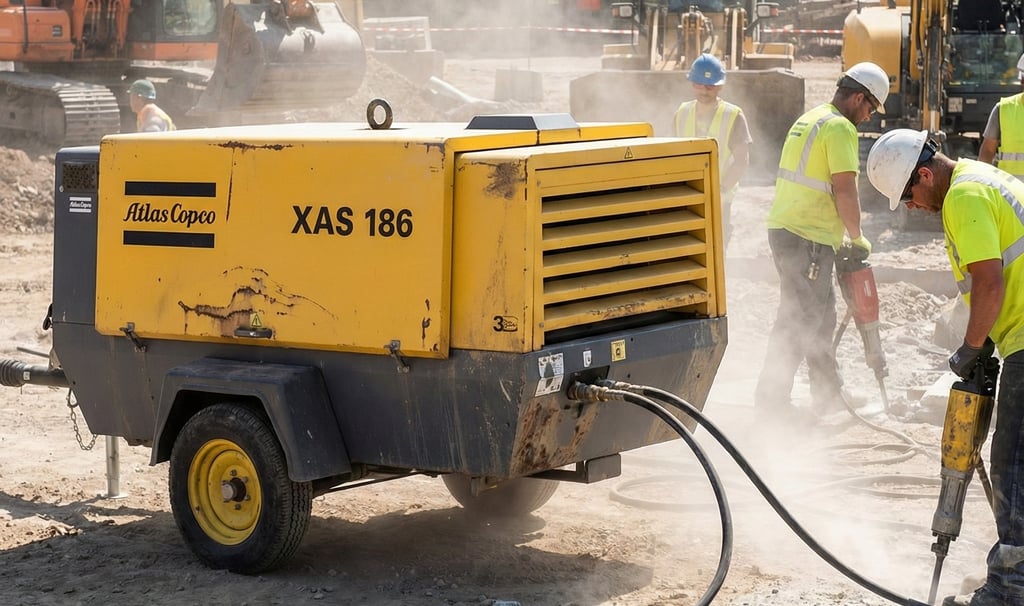

When correctly chosen, a used compressor provides a significant investment advantage; however, the wrong choice can quickly offset initial savings with unexpected breakdowns, downtime, and overhaul costs. Particularly for site-type diesel and screw compressors, systematic checks before the purchase decision are critical to identifying the machine's true condition.
As emphasized by international manufacturers and service providers, when evaluating a used compressor, you must consider not just the price, but the suitability for the application, mechanical condition, maintenance history, and availability of service/spare parts.
1. Define the Need: Pressure, Flow, and Usage Profile
The most common mistake when searching for a used compressor is browsing listings for a "powerful, affordable" machine. The logical sequence should be the reverse:
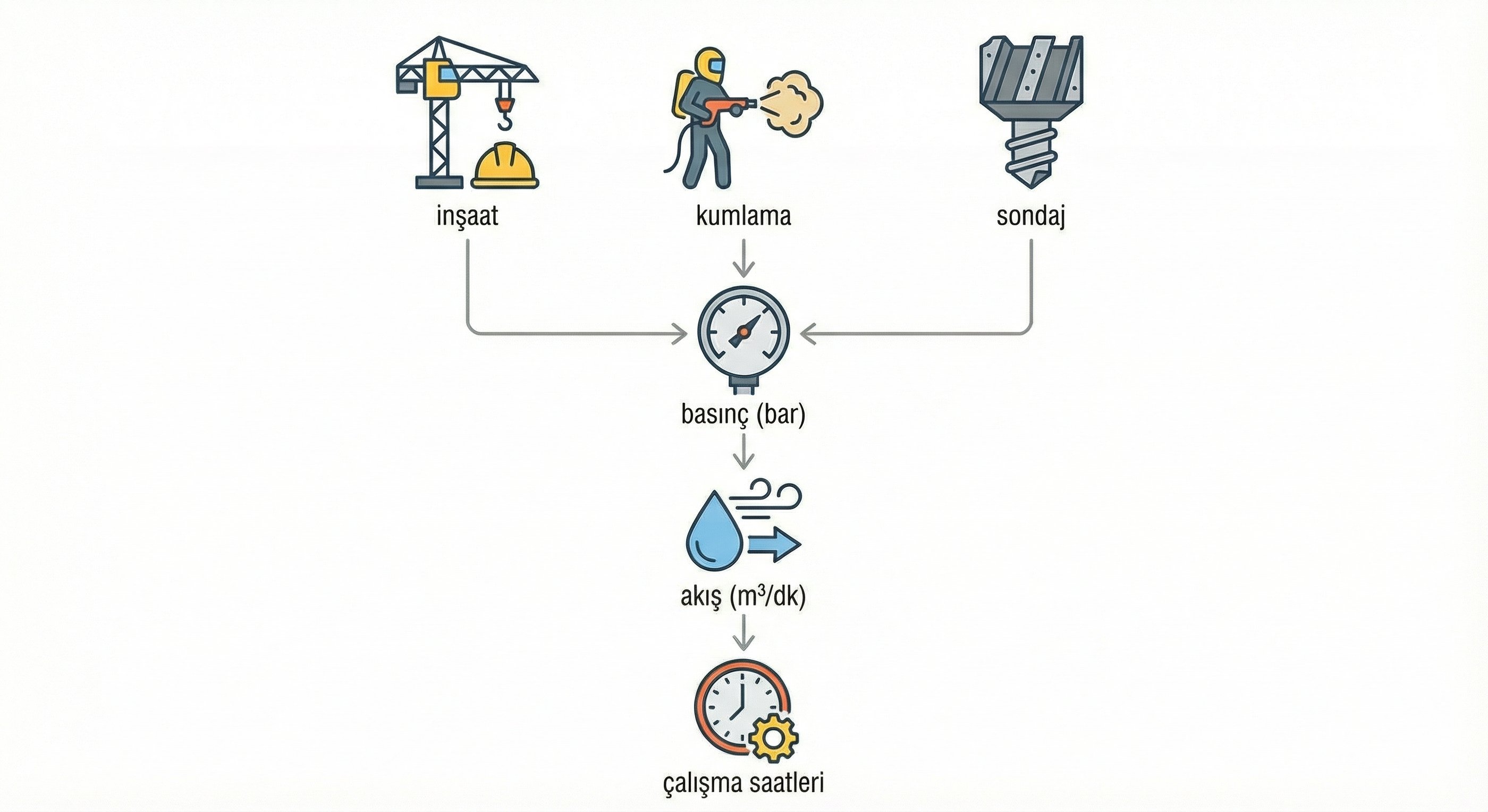
What is the application? (Sandblasting, demolition, drilling, road construction, mining, workshop, etc.)
What is the required working pressure (bar)?
What is the average and peak flow requirement (m³/min)?
How many hours per day and days per year will the machine run?
As highlighted in new compressor selection guides, diving into brands and models before clarifying the application and air demand increases the risk of future inefficiency and high costs. Therefore, even for a used unit, answer these questions in writing:
"Which tools/equipment will this machine power?"
"What is the minimum safe bar rating for my most critical piece of equipment?"
"How many pieces of equipment will consume air simultaneously?"
These answers define exactly which segment of the used screw compressor market you should be targeting.
2. Machine Identity: Nameplate, Serial Number, and Documentation
The second step is to verify the "identity credentials" of the compressor you are inspecting:
Brand, model, and year of manufacture
Serial number (from the nameplate)
User manual and service logbook (if available)
Ownership history (how many previous owners, if possible)
Manufacturers like Atlas Copco and Kaeser consistently emphasize the importance of accessing the correct model, proper series data, and appropriate documentation when considering both new and used equipment.
Essential questions to ask:
Is the nameplate legible and complete?
Do the model and capacity specifications match the serial number?
Can the original or digital user manual for the machine be provided?
Machines with faded nameplates, uncertain serial numbers, or missing documentation can cause significant headaches later regarding spare parts and technical support.
3. Visual Inspection: Oil Leaks, Corrosion, and Chassis Condition
The first glance at a used compressor provides more information than you might think. Many industry resources emphasize that a thorough visual inspection is critical for pre-owned purchases.
Key points to check:
Oil and Air Leaks:
Fresh or heavy oil accumulation under the canopy.
Traces of oily moisture at connection points.
Corrosion and Impact Marks:
Canopy panels, chassis, axle, and mounting points.
Excessive rusting or "temporary" repairs made with welding.
Radiator and Cooling Surfaces:
Clogged, bent, or crudely patched cooling fins.
Tires, Drawbar, and Braking System (For mobile diesel units):
Heavy job site damage, bending, or cracks.
Visible heavy impacts, intense corrosion, and amateurish welding or chassis repairs signify potential safety and durability risks, especially for site-type diesel compressors.
4. Running Hours and Usage History: The Meter Isn't Enough
You will often see "low hours" emphasized in listings. However, relying solely on the hour meter is a significant mistake. International used compressor guides recommend evaluating the "Triple Threat": running hours + operating conditions + maintenance history.
Key considerations:
Environment vs. Hours: Are the hours low, but the machine has spent years in a harsh, dusty construction site?
Condition vs. Hours: Are the hours relatively high, but the unit was used in an indoor facility with strict maintenance protocols?
Tampering Signs: Are there signs of tampering on the hour meter (e.g., mismatched wear on the control panel, a suspiciously new gauge)?
Verification: Are the hours supported by maintenance logs, invoices, or service reports?
Questions to ask:
"Where was the machine primarily used: a construction site or a factory?"
"When was the last major service performed, and which parts were replaced?"
"Has there been a major overhaul on the airend or the engine?"
Low hours alone do not guarantee a high-quality used compressor; they can sometimes hide unanswered questions.
5. Maintenance History and Service Records
Reliable used compressor dealers and service providers document the maintenance history prior to sale. Most reputable guides explicitly state that you should request service records during the purchase process.
Do not hesitate to ask for:
Routine Maintenance: Have periodic services (oil, oil filter, air filter, separator, etc.) been performed regularly?
Component History: Are radiator cleanings/replacements, hose, and valve changes documented?
Major Overhauls: If an airend rebuild or engine overhaul was done, who performed it and when?
Machines with long gaps in their maintenance history—especially those subjected to heavy use—can quickly lead to massive repair costs and unexpected downtime.
6. Operational Test: Cold Start and Performance Under Load
As much as the data on paper matters, the machine's actual performance is the ultimate decider. Reputable used equipment guides strongly recommend performing a test run—and if possible, testing the unit under full load—before finalizing the purchase.
The Ideal Scenario:
Cold Start:
Does it struggle to start? Are there signs of a "hard start," delayed ignition, or excessive smoke upon startup?
Reaching Working Pressure:
Does it reach the rated bar value within a reasonable timeframe?
Are there any pressure fluctuations during operation?
Noise and Vibration:
Are there any abnormal metallic sounds, knocking, humming, or excessive resonance?
Temperature Behavior:
Does the operating temperature stay within the normal range, or does it rise rapidly toward the alarm threshold?
Exhaust Smoke (Diesel):
Constant black or thick blue smoke indicates potential fuel system or oil-burning issues.
Pro Tip: If possible, turn off the compressor after the test, wait a few minutes, and then check the oil level and quality. The color, smell, and consistency of the oil can provide deep insights into the internal condition of the machine.
7. Air Quality and Oil Carryover: Inspect the Discharge Line
In screw compressors, especially oil-injected diesel models, significant amounts of oil can be carried into the air line if the separator and oil management systems are not functioning correctly. This condition poses a risk to both downstream equipment and filtration systems.
Inspection Steps:
Excessive Oil Accumulation: Check for heavy oil deposits in the filters and line components on the discharge side.
Separator History: Is it known when the oil separator and related maintenance parts were last replaced?
Oil Mist Issues: Has there been a prior history of oil vapor or oil mist complaints in the air line?
Technical guides emphasize that oil carryover and air quality must be reviewed during a used compressor purchase; this point becomes particularly critical for continuous industrial processes.
8. Spare Parts and Service Availability: You Are Buying an Ecosystem
The technical condition of a used compressor is only as good as the brand's spare parts and service ecosystem. Industry experts underline that for long-life equipment like diesel and screw compressors, you aren't just buying the machine—you are buying the support behind it.
Clarify these questions before purchasing:
Local Expertise: Is there an authorized or specialized service provider in my region capable of maintaining this brand?
Lead Times: What is the typical lead time for critical components such as the airend, control modules, valves, and sensors?
Price Benchmarking: How do the parts' price levels compare to other brands in the same segment?
Especially with brands that are new to the market, a careful balance must be struck between an attractive short-term price and the reality of uncertain long-term service and parts availability.
Purchasing a used compressor is not just about "finding an affordable machine"; it is about managing risk. By accurately defining technical requirements, verifying the machine's identity and history, performing visual and auditory inspections, and clarifying service and spare parts availability, you ensure that this risk remains at a manageable level.
By following these steps, you will:
Secure savings on the initial purchase,
Reduce unexpected major maintenance and downtime costs,
Create a more predictable air and energy infrastructure for your business.