
Common Mistakes When Buying a Used Compressor
The most common mistakes when purchasing a used compressor include focusing solely on the price, failing to verify operating hours and service history, selecting the wrong capacity, and overlooking spare parts and service availability.
COMPRESSOR SELECTION & ENGINEERING GUIDES
11/26/20256 min read
5 Red Flags in Used Compressors
Undocumented Hours and Service History: Machines with vague or missing maintenance logs.
Unclear Overhaul History: Units where the airend or engine rebuild status is unknown.
"Too Good to Be True" Pricing: Suspicious listings priced significantly below market value for that class.
Service & Parts Dead Ends: Models from new or obscure brands with no defined service network or spare parts availability.
No Load Testing: Machines purchased after hearing them only at idle, without testing performance under full load.
A used compressor can significantly reduce investment costs if chosen correctly. However, a poor decision can quickly offset initial savings through frequent breakdowns, overhaul expenses, and unplanned downtime. Especially with used screw and diesel compressors, factors like operating conditions, service history, and the spare parts ecosystem must be prioritized over just "brand and price."
Below is a summary of common field mistakes and how to avoid them, framed within the context of the secondary market dominated by brands like Atlas Copco, Ingersoll Rand, and CompAir.
1. Focusing on Price Instead of Total Cost of Ownership (TCO)
The most common reflex when buying used is focusing solely on the listing price. When one machine is significantly cheaper than another of the same power rating, the following hidden costs are often overlooked:
Fuel or Energy Consumption: Older or poorly maintained units lose efficiency.
Impending Major Service: High-cost items like airend overhauls or engine reconditioning.
Parts Availability and Lead Time: The cost of waiting for a part can exceed the cost of the part itself.
For used diesel compressors, fuel consumption and the physical condition of the airend directly dictate the Total Cost of Ownership.
Critical Questions to Ask:
"When was the last major overhaul (PM Service) performed?"
"Have there been significant repairs to the airend, engine, or chassis?"
"How does the fuel/energy efficiency of this unit compare to your existing fleet?"
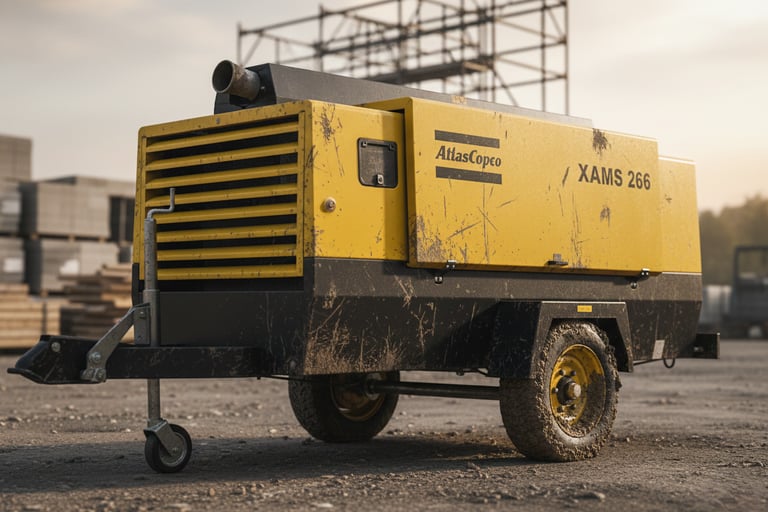
2. Selecting Based on Brand Rather Than Requirement
Top-tier brands like Atlas Copco, Ingersoll Rand, and CompAir hold strong positions in the industry and are highly preferred in the secondary market. However, a common mistake is evaluating a machine solely by its brand name.
The fundamental questions should be:
What is the required pressure (bar) for the application?
What is the necessary flow rate (m³/min / CFM)?
What is the duty cycle: continuous or intermittent?
What are the environmental conditions: an indoor factory, a dusty job site, or a mine?
A used screw compressor with the wrong capacity will increase failure risks if it constantly runs at its limit; conversely, if it is oversized, it leads to unnecessary fuel or energy waste.
Critical Questions to Ask:
"What is the average daily or weekly operating time?"
"How many pieces of equipment are consuming air simultaneously?"
"What is the minimum safe operating pressure required for the tools?"
3. Insufficient Scrutiny of Running Hours and Service History
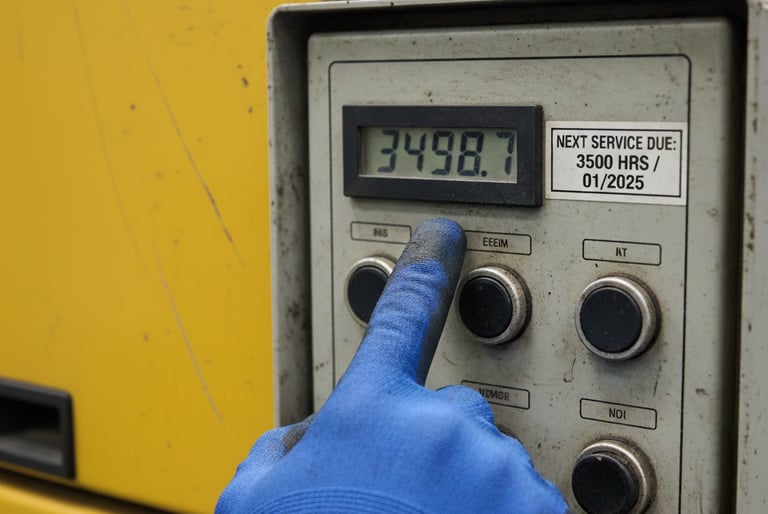
The first data point checked when buying a used compressor is usually the hour meter. However, the meter alone is not enough:
A machine may have low hours but could be "exhausted" from working in extreme, harsh conditions.
A machine may have relatively high hours but remains healthy due to strict, regular maintenance.
Common Field Oversights:
Relying solely on the hour meter reading.
Failing to request documentation regarding maintenance logs, service invoices, and replaced parts.
Trusting vague statements like "a mechanic checked it, it's fine."
For rotary screw compressors, the following technical aspects are critical:
Airend overhaul status.
Bearing and seat replacements.
Oil, filter, and separator change intervals.
For diesel models: history of the engine, injectors, and fuel system.
Critical Questions to Ask:
"Are the periodic maintenance records available for this machine?"
"If an airend rebuild was performed, who did it and when?"
"Which critical components have been replaced recently?"
4. Failing to Inquire About the Operating Environment: Job Site or Factory?
Consider two compressors of the exact same brand and model:
One may have operated in a clean, indoor facility with controlled temperatures.
The other may have been used on a dusty construction site, subjected to mud, heavy vibration, and frequent relocation.
Listing photos often mask these differences. Buyers frequently make the mistake of:
Focusing primarily on the paintwork and canopy aesthetics.
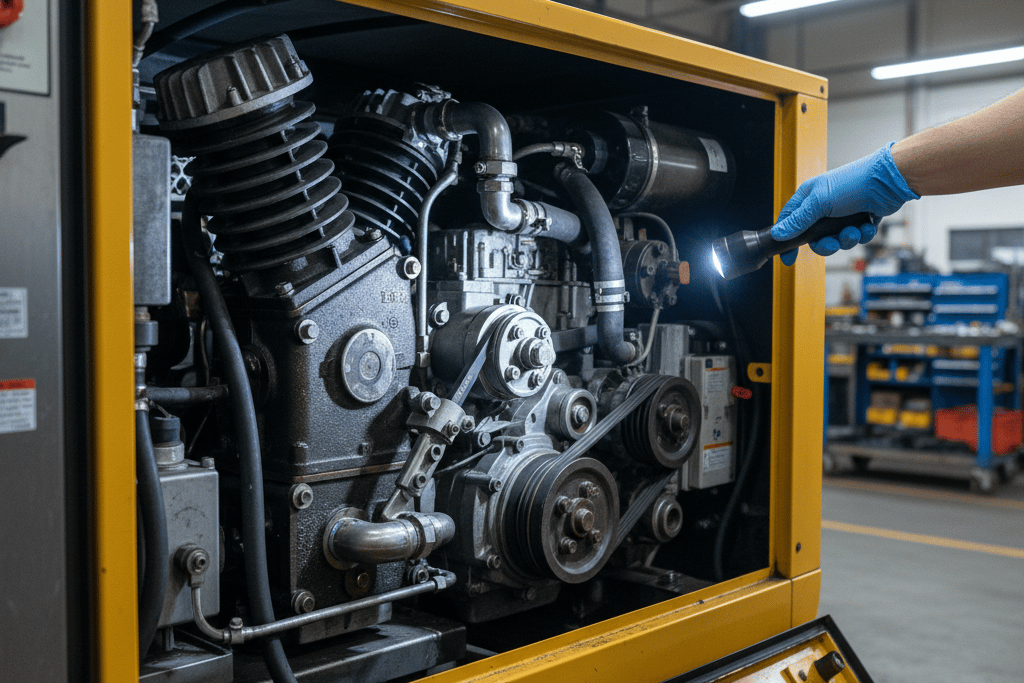
Failing to conduct a detailed inspection of the chassis, radiator, hoses, wiring, and connection points.
For used diesel compressors, heavy site usage creates additional risks for the chassis, axle, braking system, drawbar, and electrical harnesses.
Critical Questions to Ask:
"In which industry and environment was this machine previously utilized?"
"Is there any visible deformation on the chassis, axle, drawbar, or enclosure?"
"Are there any temporary fixes or 'patch-up' repairs on the radiator, hoses, or wiring?"
5. Failing to Evaluate Pressure, Flow, and Energy Consumption Simultaneously
Most buyers only ask: "How many bar and how many cubic meters per minute (m³/min) does it deliver?" However, a sound evaluation requires analyzing the "Holy Trinity" of air power:
Operating Pressure (bar)
Flow Rate (FAD - m³/min / CFM)
Fuel or Power Consumption
Newer series from Atlas Copco, Ingersoll Rand, CompAir, and similar segments often offer the same pressure and flow with significantly lower fuel or energy consumption. This results in:
A slightly higher Initial Purchase Price,
But a much lower Total Cost of Ownership (TCO).
Critical Questions to Ask:
"Are the nominal bar and flow ratings truly compatible with your actual demand?"
"How will the unit cost of air (fuel/energy per m³) change compared to your current system?"
"During a load test, do the pressure and flow remain stable?"
6. Overlooking Spare Parts and Service Availability
The question of "Who will maintain this machine later?" is often neglected during the purchase. However, the following factors become decisive in the medium to long term:
Spare parts inventory levels and price points.
Availability of authorized or specialized service in your region.
Lead times for critical components (airend, controller, valves).
Access to technical documentation and manuals.
Critical Questions to Ask:
"Who services this brand in my specific region?"
"What are the typical lead times for critical parts like the airend, control module, or valves?"
"How do the parts prices compare to your existing fleet's portfolio?"
A Note on New Market Entrants
In recent years, the market has seen an influx of compressors from various import brands, particularly of East Asian origin. These machines often stand out with highly attractive list prices for new units. However, the decision should not be based solely on the purchase price; the after-sales infrastructure must be evaluated.
Decisions made without clarifying the authorized service network, spare parts lead times, technical documentation, and warranty conditions can leave the user in a difficult position in the medium term. For brands new to the market, the following answers are vital:
"Is there a technician who actually goes into the field for this machine in my area?"
"How many days does it take to source critical parts?"
"Who is my point of contact (POC) for both phone support and field repairs in case of a breakdown?"
While the service and spare parts ecosystem is well-established in Turkey for long-standing global brands, newer entrants may not have reached that level of maturity. Therefore, whether buying new or used, seeing concrete and written evidence of after-sales support reduces future uncertainty.
7. Failing to Perform On-Site and Load Testing
A common mistake in the field is evaluating a compressor only while it is idling. However, for both screw and diesel compressors, the true condition is revealed only when the machine:
Reaches its full operating pressure,
Operates under load,
Reaches its optimal operating temperature.
Issues often missed without a load test:
Pressure Fluctuations: Inconsistent delivery under demand.
Abnormal Noise or Vibration: Only audible when the airend is under torque.
Uncontrolled Temperature Rise: Overheating issues that don't appear at idle.
Leaks and Power Loss: Oil leaks, exhaust smoke (for diesel), and engine surging.
Critical Questions to Ask:
"Is the pressure stable once the compressor reaches its rated bar?"
"Are the noise, vibration, and temperature levels within normal ranges while under load?"
"Can an independent technician or technical team accompany the test?"
Conclusion: Selecting the "Right" Machine, Not the "Cheapest"
When buying a used compressor, the goal is not simply to find the lowest price on the tag. A much more rational approach is to select a machine with predictable total costs, a capacity that matches your needs, and a clear service/spare parts infrastructure.
In Summary:
Look beyond the price: Focus on the Total Cost of Ownership (TCO).
Match the need first: Select the capacity based on the application, then consider the brand.
Verify history: Always validate running hours and service history with documentation.
Assess the environment: Inquire about the previous working conditions (job site, mine, or factory) and the resulting wear.
Verify the ecosystem: Ensure the spare parts and service network are concrete and documented, especially for newer brands.
Test under load: Always perform a load test before finalizing the purchase.
Contact Us for Your Used Compressor Needs
If you are looking for a used screw or diesel compressor that fits your requirements, please contact us by phone for detailed information about the machines in our inventory. Once you briefly share your required pressure, flow (FAD), and operating conditions, we can guide you on which models from Atlas Copco, Ingersoll Rand, CompAir, and similar segments would be the most suitable for your operation.